Check 01
Cargo area and doors
Check the cargo floor, side door runners and rear doors
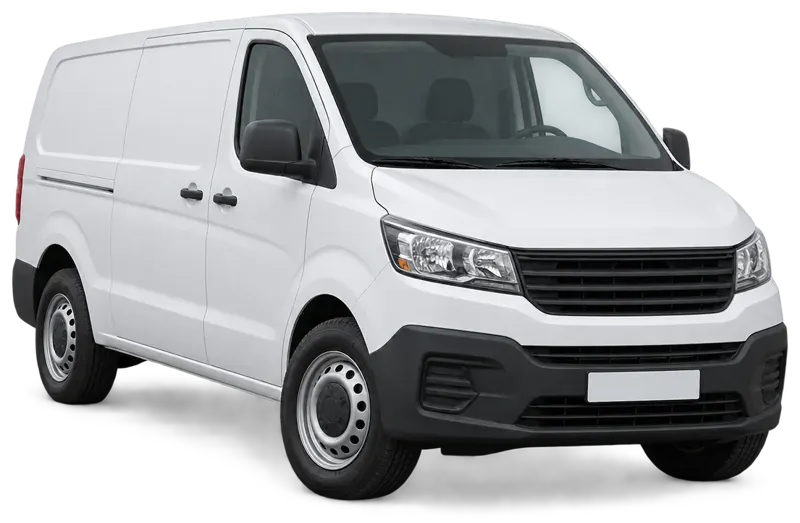
Used vans suit tradies, couriers and small businesses that need secure cargo space. Buy from a dealer or a private seller and spread the cost with a loan that fits your budget.
Fastest approval on record 7m 28s
The short answer
You can finance a used van with a secured car loan from a dealer or private seller. Lenders look at the van’s age, kilometres and price, and at your income and credit history. Vans bought for a business are often financed with a chattel mortgage in the business name.
 See what lenders may offer you
Estimate your repayments
Loan term
Credit history
$0per week
$0 per month at an example 11% p.a.
Want your real numbers?
Answer a few quick questions and a broker will come back with options lenders may offer you.
Estimate only. Example rates are for illustration, not offers or comparison rates, and fees aren’t included.
Think about cargo length and height, sliding-door access and whether you need a long-wheelbase or high-roof version. A van that is too small costs you time every day; one that is too big costs more to run.
Work vans do big kilometres, so the service history matters more than the year. A well-maintained high-kilometre van can be a better buy than a neglected low-kilometre one.
Lenders want the van to be good security for the loan. They check its age, kilometres and market value against similar cars for sale, and many set a maximum age for the car at the end of the loan term. An older car may mean a shorter loan term or fewer lenders to choose from.
They also look at you: your income, your regular expenses, your existing debts and your credit history. Responsible lending rules mean the lender has to be satisfied the repayments are affordable for you, not just that the car is worth the money.
Vans bought for a business are often financed with a chattel mortgage in the business name.
Check the cargo floor, side door runners and rear doors

Ask for the service history, as work vans do big kilometres

Search the PPSR to confirm there is no finance owing and the car hasn’t been written off or stolen.

Get a mechanic to inspect the car before you pay, especially on a private sale.

Check the logbook for regular oil changes and servicing at the right intervals.

Drive it from cold, at low and highway speeds, and listen for knocks, whines or pulling under braking.

The most common way to finance a used van. The car is security for the loan, which usually means a lower rate than an unsecured loan.
See if it suits me
For ABN holders buying a used van mainly for work. The business owns it from day one, and interest and depreciation may be deductible.
See if it suits me
Get a lender’s conditional OK before you shop, so you know your budget and can move fast on the right van.
See if it suits me
Prefer to shop by brand? Start with used Toyota loans and used Ford loans. Not set on a van? Compare used SUV loans and used ute loans.
Before you talk to a seller, run the numbers through the car loan calculator to see how the loan amount, term and your credit history change the repayment. Then read how UsedCarLoans works so you know what happens after you send your details.
Most buyers ask the same things about deposits, credit checks and loan terms, so we answered them in our used car finance FAQs. Ready to go? Start the quick quiz and a licensed broker can talk you through what lenders may offer.

Answer a few questions and a broker checks what lenders may offer, so you know your budget before you shop.
Shop dealers, Marketplace and private listings within your budget. Compare a few similar cars on age, kilometres and price.
Run a PPSR search, book an independent inspection and go through the service history before you commit.
Send the car’s details to your broker. The lender confirms its value and that it’s free of existing finance.
Sign your loan documents, the lender pays the seller, and the van is yours.
Lenders may finance a used van from either. Here’s how they compare.
 On the yard
 In a driveway
Your loan covers the car. Running a used van also means:
The Toyota HiAce has the strongest reputation for reliability, and it is the van many couriers and tradies trust for very high kilometres. The Hyundai iLoad, Volkswagen Transporter, Ford Transit and Mercedes-Benz Sprinter are also popular, each with their own strengths in size, comfort or load space. In practice, a well-serviced van of any of these brands is a safer buy than a neglected one of the best-rated model.
There is no single cut-off, because vans are built to cover big distances. Plenty of diesel vans run well past 300,000 km with regular servicing. What matters more is how the kilometres were done: steady highway courier work is easier on a van than short, heavily loaded city runs. Check the service history, clutch and gearbox, and how the van drives fully loaded if you can.
A well-maintained commercial van can last 15 years or more, and many diesels reach very high kilometres before needing major work. Lifespan depends on load, servicing and the type of work it did. Expect to replace wear items like clutches, suspension parts and sliding door runners along the way. Budget for these, especially on a van that has already done a hard life in a fleet.
Diesel usually suits vans that carry heavy loads, tow, or cover long distances, because diesels use less fuel under load and are built for high kilometres. Petrol can suit lighter city work and short trips, where a diesel's particulate filter may not get hot enough to clean itself. Petrol vans are also often cheaper to buy and simpler to maintain. Match the engine to how you will actually use it.
Not for most vans. A standard car licence in Australia covers vehicles with a gross vehicle mass (GVM) of up to 4.5 tonnes, which includes the HiAce, iLoad, Transporter and most Transits. Some large Sprinter and Transit models are rated above 4.5 tonnes and need a light rigid licence. Check the GVM on the compliance plate before you buy.
It can be good value. Fleet and rental vans are usually serviced on schedule, and the records are often available. The trade-off is hard use: lots of different drivers, heavy loads and frequent stops. Inspect the cargo floor, side and rear doors, clutch and driver's seat closely. A higher-kilometre fleet van with full records can be a smarter buy than a cheaper one with no history.
Start with the load area: look for a damaged or soaked cargo floor, rust around the rear doors and worn sliding door runners. Then check the clutch, gearbox and suspension, which wear hard on loaded work vans. Ask for the service history and a PPSR search. If the van has towed, look at the towbar and rear end, and have a mechanic inspect it on a hoist.
Most business buyers use a chattel mortgage, where the business owns the van from day one and the lender holds it as security. Other options include a commercial hire purchase, a lease, or a standard car loan in your own name if the van is mainly for personal use. The right structure depends on how you run your business, so speak with your accountant as well as a broker.
It can be possible. Many lenders prefer an ABN that has been registered for a while, often a year or two, and may ask for tax returns or BAS statements. Some lenders consider newer ABNs, especially if you have worked in the same trade as an employee before. Low-doc options may also be available, depending on the lender and your situation.
Possibly. If you are registered for GST and the van is used for business, you may be able to claim GST credits and depreciation, and interest on a chattel mortgage may also be deductible. Commercial vans are treated differently from passenger cars in some tax rules. The details depend on your situation, so ask your accountant before deciding how to structure the loan.
Sometimes. If the fit-out is already in the van when you buy it, it is usually part of the purchase price and can be financed with the van. Adding new shelving, ladder racks or signwriting later may need separate equipment finance or your own cash. Ask the lender up front whether accessories can be included, and keep invoices for any work done.
It can help cash flow by lowering your regular repayments, which suits some businesses. The catch is a lump sum owing at the end, and vans that cover big kilometres can lose value quickly. If the van is worth less than the balloon when the loan ends, you will need to find the difference. Set the balloon against a realistic estimate of the van's future value.
Yes, many couriers and delivery drivers finance their vans. If you are a contractor, lenders will usually want to see your ABN, recent income and any contracts with the delivery company. A van for this work needs to be dependable, so choose one with a solid service history. Make sure the insurance covers business use and goods in transit.
It can, especially when the van is used for business. Insurers look at what you carry, how far you drive, where the van is parked overnight and who will drive it. Tools and stock inside the van are often not covered by standard vehicle insurance, so you may need separate tools or goods-in-transit cover. Get a quote before you apply for finance.
Yes. Professionally converted camper vans and campervans built on vans like the HiAce, Transit or Sprinter can usually be financed, sometimes as a car loan and sometimes under a motorhome or recreational vehicle loan. Lenders look at the van's age, value and the quality of the conversion. A camper from a recognised converter with paperwork is usually easier to value than a one-off build.
It can be harder. A home-built fit-out is difficult for lenders to value, so many will only lend against the base van's value and ignore the conversion. Gas, electrical and water work also needs to meet the relevant standards, with certificates. Have those papers ready and expect to cover more of the price yourself, either with a deposit or savings.
It can be possible, though food vans are often treated as specialist equipment rather than a standard vehicle. Some lenders finance the van and the kitchen fit-out together, while others only cover the base vehicle. You will usually need an ABN and a business plan or trading history. Check the gas certificates, council requirements and food safety rules for your area before you buy.
Yes, if it is a passenger van or crew van with factory-fitted seats and seatbelts. Crew versions of vans like the HiAce or Transit carry a family plus plenty of gear, though they ride and feel more like a work vehicle than an SUV. If the van will mainly be used for personal trips, a standard car loan in your name is usually the right fit rather than a business loan. Make sure any added seats are approved and certified.