
Workmate (70 Series)
The no-frills work version, common on farms and in fleets.
The Toyota LandCruiser is a legendary off-roader built for outback touring and towing. If you’ve found a used one, you can finance it from a dealer or a private seller.
Fastest approval on record 7m 28s
The short answer
You can finance a used Toyota LandCruiser with a secured car loan. Lenders look at the car’s age, kilometres and value, and at your income and credit history. Well-kept 4WDs keep their value, but heavily modified ones can be harder for some lenders to value.
 See what lenders may offer you
Estimate your repayments
Loan term
Credit history
$0per week
$0 per month at an example 11% p.a.
Want your real numbers?
Answer a few quick questions and a broker will come back with options lenders may offer you.
Estimate only. Example rates are for illustration, not offers or comparison rates, and fees aren’t included.
The LandCruiser suits serious tourers, people who tow heavy caravans and anyone heading into remote country. It is expensive to buy and run, but it is built for distances and conditions most cars never see.
Lenders want the Toyota LandCruiser to be good security for the loan. They check its age, kilometres and market value against similar cars for sale, and many set a maximum age for the car at the end of the loan term. An older car may mean a shorter loan term or fewer lenders to choose from.
They also look at you: your income, your regular expenses, your existing debts and your credit history. Responsible lending rules mean the lender has to be satisfied the repayments are affordable for you, not just that the car is worth the money.
Well-kept 4WDs keep their value, but heavily modified ones can be harder for some lenders to value.
The workhorse wagon, ute and troop carrier. Still sold new, and loved by farmers and remote workers.
A big, comfortable wagon with a twin-turbo V8 diesel in most versions. Heavy on fuel but a proven tourer.
A twin-turbo V6 diesel and modern tech. Used prices have stayed very strong.
The grades you’ll see most in listings. Higher grades cost more to buy, insure and finance.
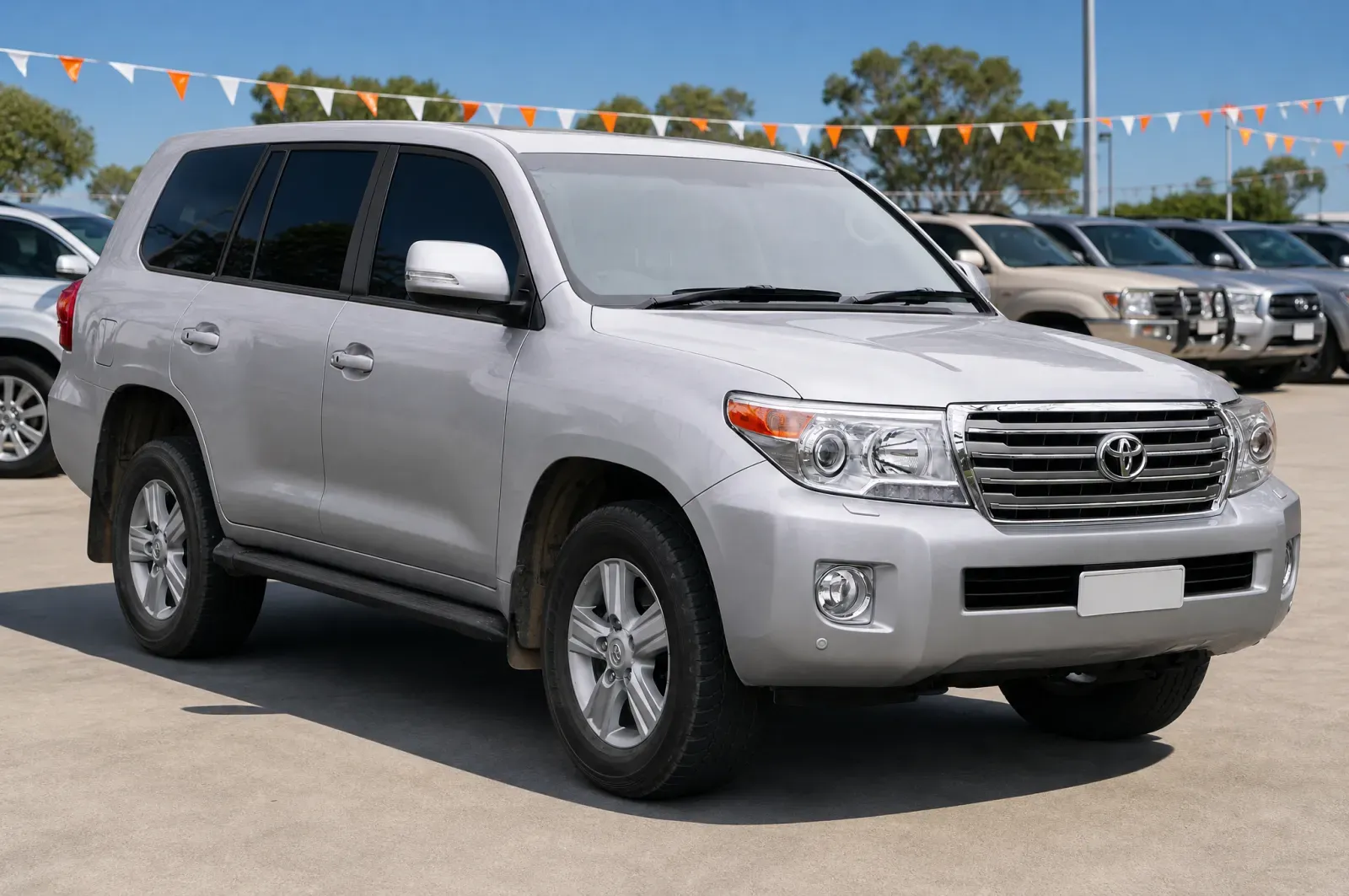
The no-frills work version, common on farms and in fleets.
Practical grades popular with tourers who add their own gear.
More comfort and features for long family trips.
The luxury flagship, with the highest used prices.

Look underneath for damage from rocks and corrugations, and check the bullbar, side steps and suspension.

Long-range tanks, lift kits and dual-battery setups are common. Check they are legal, engineered where needed and declared to your insurer.

Big engines mean big fuel and servicing bills. Budget for these on top of your loan repayments.

Ask about the diesel particulate filter (DPF) and look for any engine warning lights.

Search the PPSR to confirm there is no finance owing and the car hasn’t been written off or stolen.

Get a mechanic to inspect the car before you pay, especially on a private sale.

The most common way to finance a used Toyota LandCruiser. The car is security for the loan, which usually means a lower rate than an unsecured loan.
See if it suits me
No security over the car, so older or cheaper cars can qualify. Rates are usually higher than a secured car loan.
See if it suits me
Get a lender’s conditional OK before you shop, so you know your budget and can move fast on the right LandCruiser.
See if it suits me
Still weighing it up? Our guide to used 4WD loans covers what lenders look at across every 4WD, and financing a used Toyota looks at the whole range. Other used Toyotas worth a look: the Toyota Hilux, Toyota Corolla and Toyota RAV4.
Before you talk to a seller, run the numbers through the car loan calculator to see how the loan amount, term and your credit history change the repayment. Then read how UsedCarLoans works so you know what happens after you send your details.
Most buyers ask the same things about deposits, credit checks and loan terms, so we answered them in our used car finance FAQs. Ready to go? Start the quick quiz and a licensed broker can talk you through what lenders may offer.
Five stops between you and the keys.
Start step one

Answer a few questions and a broker checks what lenders may offer, so you know your budget before you shop.
Shop dealers, Marketplace and private listings within your budget. Compare a few similar cars on age, kilometres and price.
Run a PPSR search, book an independent inspection and go through the service history before you commit.
Send the car’s details to your broker. The lender confirms its value and that it’s free of existing finance.
Sign your loan documents, the lender pays the seller, and the LandCruiser is yours.
Lenders may finance a used LandCruiser from either. Here’s how they compare.
 On the yard
 In a driveway
Your loan covers the car. Running a used Toyota LandCruiser also means:
It depends on how you'll use it. The 200 Series wagon (2007 to 2021) is the usual pick for family touring, with a twin-turbo V8 diesel in most versions and plenty of cabin room. The 70 Series, including the 79 single and dual cab, suits farm, mining and remote work. The 300 Series (2021 onward) is the most modern but still carries very high used prices. Older 80 and 100 Series are now classics, so condition matters more than the badge.
They are all 70 Series body styles. The 76 is the five-seat wagon, the 78 is the Troop Carrier and the 79 is the cab-chassis ute, sold as a single or dual cab. They share most mechanical parts, so the choice comes down to the body. A 79 suits a tray and canopy for work, the 76 is the most practical as a daily driver, and the Troopy is popular for touring builds because of its long, tall rear space.
Focus on the V8 diesel and the service history. Many owners and mechanics flag oil consumption on some earlier engines, coolant leaks from the engine valley, and injector wear on high-kilometre cars, so have a mechanic check for all three. Underneath, look for damage from rocks, corrugations and heavy towing. On versions with KDSS suspension, check the hydraulic lines for leaks. A logbook with on-time oil changes is the best sign of a healthy engine.
The 300 Series is still young as a used car, so long-term reliability data is limited. Some early vehicles have been subject to recalls, so ask a Toyota dealer to check the VIN and confirm all recall work has been completed. Many 300 Series cars are still within the factory warranty, which makes on-time dealer or logbook servicing important. Ask for the service records and check that any warranty repairs are documented before you commit.
There's no hard cut-off, because a well-serviced LandCruiser can run well past 300,000 km. How it was driven matters more than the number. A highway-driven 200 Series with full logbook history can be a safer buy than a lower-kilometre one that towed heavy loads on corrugations or spent years on a mine site. Expect higher-kilometre examples to need suspension, injector or driveline work sooner, and factor that into your offer.
Choose the LandCruiser if you tow heavy or need extra room and toughness for remote touring, and the Prado if you want a 4WD that's easier to park and cheaper to run. Most LandCruiser wagons are rated to tow 3,500 kg braked, while older Prados are generally rated lower. The Prado is lighter, often uses less fuel and usually costs less to buy, which also means a smaller loan and lower repayments.
Neither suits everyone. The LandCruiser has a long reputation for resale value and a large dealer and parts network in country towns, which matters if you travel remote. The Y62 Patrol, sold from 2013, uses a petrol V8 that many tourers like for its power, though it's thirsty. Older GU Patrols remain popular with budget tourers. Whichever you prefer, compare service history and condition before the badge.
A lot compared with a family SUV. Owners of V8 diesel 200 Series and 70 Series models commonly report figures in the low to mid teens of litres per 100 km in everyday driving, and much more when towing a caravan or running bigger tyres. Long-range tanks are popular for that reason. Before you buy, work out a realistic weekly fuel bill and add it to your loan repayments, so the total still fits your budget.
Yes, V8 diesel 70 Series models from the late 2016 update gained a diesel particulate filter to meet tougher emissions rules. A DPF needs regular highway running to clean itself, so a 79 that only did short farm or town trips may have had trouble. Ask whether it has shown warning lights or needed forced regenerations, and check the service records. Earlier models don't have a DPF, which some buyers prefer.
Generally yes. LandCruisers have a long reputation for some of the strongest resale values in Australia, especially 70 Series utes and late-model wagons. That said, used prices move with supply and demand, and they can soften when new-car waiting lists ease. Heavy kilometres, accident history and poor-quality modifications also cut into value. Don't assume a used LandCruiser will always be worth what you paid for it.
It can be, as long as the lift stays within your state's rules or has been engineered and certified. Limits on suspension and tyre size changes vary between states, and bigger changes usually need an engineer's report. Ask the seller for any certificates, and declare every modification to your insurer, because an undeclared lift can give them grounds to reduce or refuse a claim. Also check the steering and handling on the test drive.
It can be possible, but options narrow as the car gets older. Many lenders set a maximum vehicle age at the end of the loan term, so a 25-year-old 80 Series may not qualify for a standard secured car loan. In that case an unsecured personal loan may be an option, though it's assessed differently. A broker can tell you which lenders consider older 4WDs and how the age limit affects the term.
Usually bigger than for most used cars, because LandCruisers hold their value. A late-model 200 Series or any 300 Series can cost as much as many new SUVs, while a tired 100 Series costs a fraction of that. Set your budget from repayments you can comfortably afford, then add fuel, tyres, insurance and servicing, which run higher on a big 4WD. Lenders weigh all of these costs when working out what you can borrow.
Often yes, if the LandCruiser is mainly used in your business. With a chattel mortgage the business owns the vehicle from the start and the loan is secured against it. You may be able to claim GST, interest and depreciation, but that depends on your business use and circumstances, so ask your accountant before you sign. Sole traders can apply, and lenders usually ask how long your ABN has been registered.
Only if you could pay or refinance the final amount without relying on the car. A balloon lowers your regular repayments by leaving a lump sum due at the end, and because LandCruisers have historically held value, some buyers plan to sell to cover it. That's not a sure thing: prices can fall, and kilometres or damage reduce what it's worth. A balloon also usually means paying more interest over the life of the loan.
Yes, lenders can consider FIFO income, but they look closely at how it's earned. Expect to show recent payslips, and some lenders treat overtime, allowances or roster bonuses more cautiously than base pay. If you work as a contractor on an ABN, you may need tax returns or BAS statements instead. A high income helps, but lenders still weigh your expenses and existing debts, so a clean picture of both makes the application smoother.
Run a PPSR search on the VIN before you pay anything. It shows whether money is still owed and whether the vehicle has been recorded as written off or stolen, which matters because LandCruisers are popular with thieves. Confirm the seller's name matches the rego papers, check that the VIN and engine number match the paperwork, and ask your lender which documents they need to settle a private sale.