Check 01
Family wear
Check the rear seats and cargo area for family wear and tear
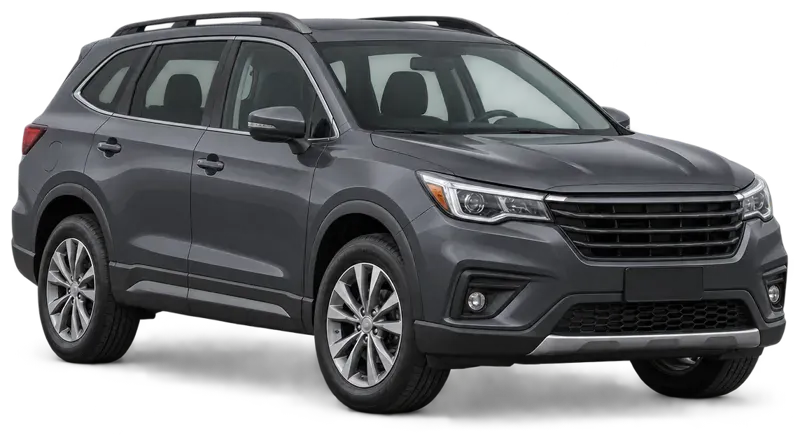
Used SUVs suit families who need room for kids, prams, sport gear and weekends away. Buy from a dealer or a private seller and spread the cost with a loan that fits your budget.
Fastest approval on record 7m 28s
The short answer
You can finance a used SUV with a secured car loan from a dealer or private seller. Lenders look at the SUV’s age, kilometres and price, and at your income and credit history. SUVs hold their value well, which lenders like, but they cost more to buy than a small car.
 See what lenders may offer you
Estimate your repayments
Loan term
Credit history
$0per week
$0 per month at an example 11% p.a.
Want your real numbers?
Answer a few quick questions and a broker will come back with options lenders may offer you.
Estimate only. Example rates are for illustration, not offers or comparison rates, and fees aren’t included.
Decide how much space you need. A small SUV suits couples and city driving, a mid-size SUV fits most families, and a seven-seater makes sense if you regularly carry more than five people.
Most SUVs are front-wheel drive or all-wheel drive rather than true 4WDs. AWD helps on gravel and wet roads, but if you plan real off-roading, look at a 4WD instead.
Lenders want the SUV to be good security for the loan. They check its age, kilometres and market value against similar cars for sale, and many set a maximum age for the car at the end of the loan term. An older car may mean a shorter loan term or fewer lenders to choose from.
They also look at you: your income, your regular expenses, your existing debts and your credit history. Responsible lending rules mean the lender has to be satisfied the repayments are affordable for you, not just that the car is worth the money.
SUVs hold their value well, which lenders like, but they cost more to buy than a small car.
Check the rear seats and cargo area for family wear and tear

Confirm whether it is two-wheel drive or all-wheel drive

Search the PPSR to confirm there is no finance owing and the car hasn’t been written off or stolen.
Get a mechanic to inspect the car before you pay, especially on a private sale.

Check the logbook for regular oil changes and servicing at the right intervals.

Drive it from cold, at low and highway speeds, and listen for knocks, whines or pulling under braking.
The most common way to finance a used SUV. The car is security for the loan, which usually means a lower rate than an unsecured loan.
See if it suits me
No security over the car, so older or cheaper cars can qualify. Rates are usually higher than a secured car loan.
See if it suits me
Get a lender’s conditional OK before you shop, so you know your budget and can move fast on the right SUV.
See if it suits me
Narrowing it down? Each popular model has its own guide to the years, versions and checks that matter: used Toyota RAV4 finance and used Mazda CX-5 finance. Prefer to shop by brand? Start with used Toyota loans, used Ford loans and used Mazda loans. Not set on a SUV? Compare used ute loans and used 4WD loans.
Work out a comfortable repayment first with our used car loan calculator, then check how the process works, from the 60-second quiz to a licensed broker comparing lenders for you.
If something still isn’t clear, our frequently asked questions are a good next stop. Once you’ve picked your SUV, tell us about the car and we’ll connect you with a licensed broker. It’s free and there’s no obligation.
Answer a few questions and a broker checks what lenders may offer, so you know your budget before you shop.
Shop dealers, Marketplace and private listings within your budget. Compare a few similar cars on age, kilometres and price.
Run a PPSR search, book an independent inspection and go through the service history before you commit.
Send the car’s details to your broker. The lender confirms its value and that it’s free of existing finance.
Sign your loan documents, the lender pays the seller, and the SUV is yours.
Lenders may finance a used SUV from either. Here’s how they compare.
 On the yard
 In a driveway
Your loan covers the car. Running a used SUV also means:
SUV stands for sport utility vehicle. In Australia it covers any wagon with a raised ride height and a higher seating position, from small city models like the Mazda CX-3 up to seven-seaters like the Toyota Kluger. Most are built like a car underneath, with front-wheel or all-wheel drive. A few, such as the Prado, are true 4WDs, but most SUVs aren't designed for serious off-roading.
For most city and suburban driving, a 2WD SUV is enough. It's usually cheaper to buy, uses a little less fuel and has fewer parts to maintain. AWD earns its keep on gravel roads, in snow country and on slippery country roads, or if you tow a light trailer up steep driveways. Many SUVs were sold in both versions, so confirm which one you're looking at before you agree on a price.
Buy the smallest SUV that comfortably fits your life. A small SUV suits singles, couples and city parking. A medium SUV is the most popular family choice, fitting two child seats and a pram. A large or seven-seat SUV makes sense if you regularly carry more than five people or tow. Bigger SUVs cost more to buy, fuel and insure, which also means a larger loan.
There's no single best, but some models are consistently recommended. In the medium class, the Toyota RAV4, Mazda CX-5, Honda CR-V, Hyundai Tucson and Kia Sportage are popular for reliability and value. Among small SUVs, the Mazda CX-3 and Mitsubishi ASX are common picks. Shortlist two or three that suit your budget and seating needs, then compare condition, service history and safety ratings.
Popular used seven-seaters include the Toyota Kluger, Mazda CX-9 and CX-8, Kia Sorento, Hyundai Santa Fe and Mitsubishi Outlander. Third rows vary a lot: some fit adults on short trips, others only suit younger kids. Take the family to the inspection, test fitting your child seats, and check the boot space with all seats up. A seven-seater you rarely fill can cost more than it's worth.
Not automatically. Safety depends mainly on a car's crash rating and safety features rather than its shape. A higher seating position helps visibility, but a taller body can feel less stable in emergency moves. Check the ANCAP rating and the year it was tested, because older ratings were set under easier test rules. Look for autonomous emergency braking, curtain airbags and a reversing camera on any used SUV.
It can be, especially if most of your driving is in stop-start traffic, where hybrids save the most fuel. Used hybrid SUVs such as the Toyota RAV4, Kluger and C-HR, and newer Kia and Hyundai hybrids, often cost more than petrol equivalents, so work out how long the fuel savings take to cover the extra price. Ask for records showing the hybrid system was checked during servicing.
Used usually costs less, because most SUVs lose a big share of their value in the first few years. A new SUV gives you a full warranty and the latest safety tech, but at a higher price and a bigger loan. A near-new used SUV can be a good middle ground, often with some factory warranty left. Compare the total cost, including interest, rather than the sticker price alone.
Families are hard on SUVs, so look closely inside. Check the rear seats and boot for stains, tears and broken trim, and make sure the child seat anchor points and ISOFIX mounts are intact. Test the tailgate struts, rear doors and child locks. Confirm whether the car is 2WD or AWD, check the tyres for even wear, and ask for the service history before you talk price.
It can be a smart buy. Ex-fleet SUVs are often serviced on schedule and sold at a few years old, sometimes with factory warranty remaining. Ex-rental cars may have had many different drivers, so check the interior, wheels and bumpers for scuffs and minor damage. Ask for the service records, run a PPSR check and compare the price with private-sale examples of the same model.
Only if you do lots of highway kilometres or tow regularly. Diesel SUVs offer strong torque and good range on long trips, but modern ones have a diesel particulate filter that needs regular highway driving to clean itself. Short school runs and city trips can clog it, leading to costly repairs. Several brands have dropped diesel from their medium SUVs, so parts and resale demand are worth considering.
Yes. Most people buying a used SUV use a secured car loan, which uses the SUV itself as security. That can mean lenders view it as lower risk than an unsecured personal loan. Lenders review what you earn, what you spend, your credit file, and how old and how valuable the SUV is. SUVs tend to hold value well, which lenders like. A short quiz connects you with a broker who can compare lenders for you.
It depends on your income, expenses and how many dependants you have. Lenders count each child in their assessment, so childcare, school fees and other family costs reduce how much you can borrow. Existing debts such as credit cards and personal loans matter too. Work out the repayment you can comfortably afford each month, then let that set your SUV budget rather than the other way around.
It can be possible, but lenders look closely at what you can afford on the income you have now. Some may consider a confirmed return-to-work date, often supported by a letter from your employer, while others are more cautious. If one partner earns the household income, the loan has to fit that budget. Being upfront about your situation helps a broker find lenders whose rules suit you.
Not always. Some lenders may consider a loan with no deposit for eligible applicants, depending on credit history, income and the vehicle. A deposit still helps: it reduces the amount you borrow, lowers the interest you pay overall, and gives you a buffer if the SUV loses value faster than expected. Even a modest deposit can make a family budget easier to manage.
Yes, and a trade-in can work as your deposit, reducing how much you need to borrow. If you still owe money on your current car, that loan has to be paid out when you trade it in. Some lenders may let you roll a shortfall into the new loan, but that means borrowing more than the SUV is worth, so it's worth getting a few valuations and comparing a private sale first.
It can. Home loan lenders count your car loan repayments as an ongoing commitment, which reduces how much they'll lend you. If you're planning to buy a home soon, think about a cheaper SUV, a bigger deposit or timing the car purchase after your home loan is settled. Talk your plans through with a broker before you commit to either loan.